
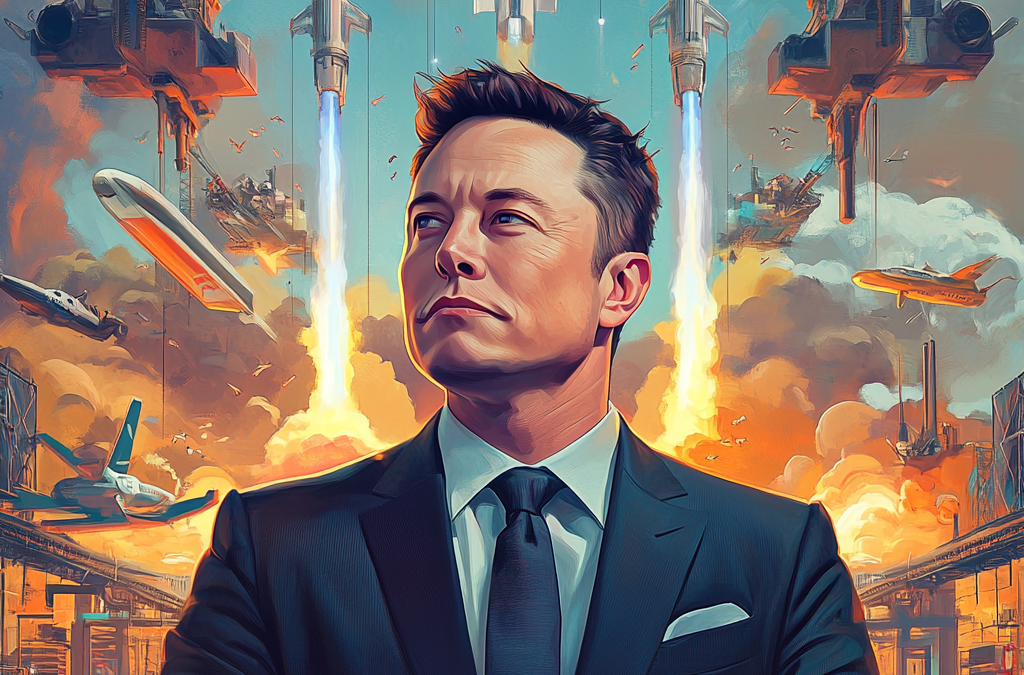
Elon Musk’s reputation as a hands-on leader goes far beyond being just the “money guy” in his ventures. Despite his wealth, Musk has consistently been at the forefront of technical and strategic developments across his companies. His involvement spans from engineering to product development and vision-setting. The claim that Musk is “just the money” is as misguided as saying Steve Jobs was “just the money” at Apple. Jobs, much like Musk, was deeply involved in pushing the boundaries of product design, functionality, and user experience.
Steve Jobs Comparison: Visionary and Hands-On Leader
Steve Jobs, the co-founder of Apple, is perhaps the most comparable figure to Elon Musk in terms of direct product involvement. Jobs wasn’t a software engineer or hardware designer, but his attention to detail, user experience, and design was unparalleled. He didn’t physically design the iPhone, but without his relentless focus on aesthetics, user interface, and function, it wouldn’t have become the groundbreaking product it is today.
Jobs knew how to push his teams to deliver revolutionary products like the iPod, iPhone, and Macintosh. He challenged designers like Jony Ive to create devices that combined beauty with functionality, much in the same way that Musk pushes his engineers to break boundaries at SpaceX and Tesla. Musk’s work with Tesla’s Model S and Jobs’ development of the iPhone both reflect the vision of leaders who knew how to direct the technical experts beneath them toward exceptional innovation.
Similarly, Musk’s deep involvement in the development of rockets at SpaceX, electric vehicles at Tesla, and brain-machine interfaces at Neuralink goes far beyond providing capital or setting the general direction. He is often found in the trenches with engineers, solving technical problems, testing innovations, and pushing for breakthroughs. Let’s break down his role across his major ventures to demonstrate how Musk leads by example, something every entrepreneur should aspire to do in their own companies.
1. SpaceX: Revolutionizing Space Travel and Expanding Human Horizons
- Lead Engineer: Musk was the original lead engineer for SpaceX, actively involved in the design and development of rockets. Falcon 1, SpaceX’s first orbital rocket, was largely developed under Musk’s technical oversight. His involvement extended to key decisions on materials, design choices, and solving technical problems during early failures. He pushed for reusable rockets, which were once considered a pipe dream, drastically reducing the cost of space travel.
- Reusable Rockets: SpaceX’s reusable rockets, particularly the Falcon 9 and Starship, represent one of the most significant innovations in space travel. Musk wasn’t just an observer—he was often on the factory floor or even sleeping in the office, working alongside engineers to solve issues with materials and propulsion systems.
- StarLink: Starlink, SpaceX’s global satellite internet network, is another Musk-driven project. Musk steers the vision to provide affordable internet access globally, especially in underserved areas. As of 2024, more than 5,000 satellites have been launched. Musk is not only overseeing deployment but regularly discusses technical aspects and optimizes the satellite systems.
2. Tesla: Accelerating the Transition to Sustainable Energy
- Product Vision and Engineering: Musk joined Tesla in 2004, not just as a CEO but as a product architect. His direct involvement in engineering decisions helped shape the electric vehicle market. Musk pushed his teams to build an electric vehicle that wasn’t just practical but desirable. From Model S to Model 3, Musk’s obsession with battery technology and Autopilot systems resulted in cars that outperform most gasoline vehicles.
- Gigafactories: Musk also spearheaded the development of Gigafactories, massive production facilities for Tesla’s batteries, critical for scaling electric vehicle production and renewable energy storage. Musk’s vision of vertical integration—producing batteries at scale to reduce costs and ensure supply—is a direct response to the global need for sustainable energy solutions.
- Hands-On Involvement: Musk’s personal involvement extends far beyond product launches. He’s known to spend nights at Tesla factories when things aren’t going as planned, actively engaging with engineers to troubleshoot and refine production processes. He pushes the limits of what electric vehicles can do, much like Jobs pushed Apple engineers to perfect the iPhone.
3. Optimus (Tesla Bot): Automation for Human Betterment
- Personal Initiative: Musk’s vision for Optimus, a humanoid robot being developed by Tesla, isn’t about hype. It’s about addressing labor shortages and performing tasks that are dangerous or repetitive for humans. Musk introduced Optimus in 2021, aiming to revolutionize how physical labor is handled in industries ranging from manufacturing to caregiving.
- AI and Robotics: Optimus builds on Tesla’s advancements in AI and autonomous systems. Musk is hands-on in ensuring Tesla’s AI is integrated seamlessly into robotics, pushing his teams to develop a robot that could transform labor markets and, potentially, human life itself. Optimus isn’t just a side project—it’s a core component of Musk’s larger vision of human-AI interaction.
4. X (formerly Twitter): Free Speech and a Global Digital Infrastructure
- Platform Overhaul: After acquiring Twitter in 2022, Musk rebranded it as X, setting his sights on turning it into a super app for payments, shopping, and more. Musk wasn’t just reshaping the platform’s algorithms; he brought in engineers from his other ventures to overhaul its infrastructure, pushing for a more decentralized platform that integrates AI and payment systems.
- Freedom of Speech and Business: Musk’s goal for X is to balance free speech with monetization, enabling content creators to thrive while ensuring the platform remains profitable and accessible. Like Jobs with the iPhone, Musk isn’t just a figurehead; he’s hands-on in the development of X’s long-term strategy.
5. Neuralink: Helping the Disabled and Revolutionizing Human Cognition
- Hands-On Development: Musk co-founded Neuralink in 2016 with a vision of creating brain-machine interfaces (BCI) to treat neurological conditions like paralysis and Alzheimer’s. Musk is deeply involved in Neuralink’s technical roadmap, frequently discussing the intricacies of its brain chip and how it aims to improve cognitive function or even merge human intelligence with AI. He’s not just sitting in boardrooms—he’s engaged in pushing this groundbreaking technology forward.
6. The Boring Company: Solving Urban Transit and Congestion
- Urban Infrastructure: The Boring Company aims to reduce urban congestion by creating underground tunnel systems. Musk’s Hyperloop concept represents his larger vision for future mobility. These innovations can alleviate traffic, reduce pollution, and improve city life. Musk’s focus on rapid, cost-effective tunnel-boring technology shows that, like his other ventures, he’s involved in the details, pushing the limits of existing infrastructure.
- Las Vegas Loop: The Las Vegas Loop is a concrete example of how Musk’s vision for tunneling can be put into practice. Musk’s insistence on efficiency and cost-effectiveness has shaped the way these tunnels are being constructed, with potential global applications for easing traffic.
7. Tesla Energy (SolarCity): Enabling a Sustainable Energy Future
- Sustainable Energy Solutions: Musk’s acquisition and integration of SolarCity into Tesla Energy aims to create a complete sustainable energy ecosystem. His hands-on role in the development of the Powerwall and solar roof solutions demonstrates his commitment to reducing the world’s reliance on fossil fuels and offering accessible clean energy alternatives.
- Grid Independence: The Tesla Powerwall allows homes and businesses to store solar energy and become less dependent on the grid, a crucial step toward sustainable living. Musk is directly involved in scaling this technology globally, with a focus on creating a renewable energy infrastructure.
8. Hyperloop: Revolutionizing Transportation
- Visionary Founder: Although Musk doesn’t directly manage the development of the Hyperloop, he introduced the concept through a white paper in 2013. The Hyperloop, a high-speed transportation system, could drastically reduce travel times and emissions, transforming how people commute between cities. Musk continues to offer technical insights into how Hyperloop could revolutionize transit systems globally.
Addressing the Criticism: More Than Just Money
The idea that Musk is merely the “money” behind these ventures is as short-sighted as saying Steve Jobs was just a financier at Apple. In both cases, these men provided the vision, leadership, and often the hands-on problem-solving needed to create revolutionary products. While Musk has billions at his disposal, what truly sets him apart is how deeply involved he is in the engineering, design, and implementation of his projects.
When critics argue that this money could be better spent on issues like poverty or climate change, they miss how Musk’s companies are, in fact, addressing these problems at a systemic level. For example:
- Tesla is reducing carbon emissions and transforming how the world uses energy.
- SpaceX is providing global internet access to underserved populations via Starlink.
- Neuralink is working to solve critical neurological issues that affect millions.
- The Boring Company could alleviate urban congestion and pollution, improving life in cities.
Leading by Example
Elon Musk’s approach is a model for modern entrepreneurship—he doesn’t just fund companies, he actively leads them by example. He’s in the trenches with engineers, solving problems, pushing boundaries, and ensuring the products meet his high standards. Musk’s work is a testament to what every entrepreneur should be doing in their own ventures: taking ownership of both the vision and the execution.
In short, Musk is not just a visionary or a source of capital—he’s an active participant in driving technological breakthroughs that are reshaping industries and, more importantly, addressing humanity’s greatest challenges. Entrepreneurs can learn from his example by getting involved in the details and pushing their teams to achieve the impossible.





 Guest Posting

