

By Jamie Roy
Quick Snapshot
“Wondered how AI is changing your online life? Starting with personalized interfaces up to predictive designs, AI is transforming the way we communicate online. Ready to feel smarter and more intuitive in the digital world? And now, let’s explore the transformation of everything by AI-driven design!!”
The combination of artificial intelligence (AI) and design is shifting the paradigm in the modern, fast-paced digital world. The digital experience is revolutionized by AI and machine-learning solutions designed, optimized, and personalized. AI is changing all interfaces on websites as well as mobile applications, not only by predicting user behavior but also by automating design tasks. But what can businesses and designers do to take advantage of these technologies to keep up to date? With AI constantly developing, there appears to be no limit regarding the types of smarter, more dynamic online experiences that are possible. This article explores how AI is transforming design and what the future of those who are willing to adopt this technological revolution promises.
The Power of AI in Digital Experiences
Artificial intelligence is not a thing of the future anymore; it is a part of the digital world. In design, AI can be used to automate routine tasks, enhance the user experience (UX), and develop more intelligent and adaptable interfaces. The analysis of large volumes of data allows AI tools to identify trends and predict user needs and inform design decisions that would have been hard or impossible to perform without human intervention. It could involve personalizing content, optimizing layout designs, or even creating new designs, but AI is quickly changing how digital experiences are created.
The Role of AI in Transforming User Experiences and User Interfaces
AI is fundamentally transforming the nature of user experience on digital platforms. Conventional user interface (UI) design emphasized fixed elements and fixed paths to which users could adhere. AI now allows interfaces to become interactive, fluid, and intuitive, reacting to users on a real-time basis. Machine learning (ML) algorithms are able to analyze user behavior to make predictions, personalize the interface, and even modify design elements to fit individual preferences.
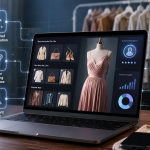
As an example, AI-based systems can determine which layout is most likely to attract a user based on their past interactions. It can then issue customized suggestions, e.g., recommendations of products or content based on the interests of a user. This type of flexibility is notably expressed in e-Commerce sites where AI agents monitor customer tastes and browsing patterns to tailor the shopping experience.
Besides predictive functions, AI is also increasing user accessibility. Digital platforms are becoming increasingly inclusive, and voice recognition, image recognition, and other AI technologies allow users with disabilities to engage with websites and applications in new ways that were previously impossible.
Personalization at Scale: The Effect of AI on Digital Interaction Customization
The possibility to personalize digital experiences at scale is one of the greatest benefits that AI can bring to design. Personalization has been a fundamental aspect of good design, which becomes a daunting undertaking to accomplish manually with millions of users. However, AI enables companies to increase personalization without compromising on quality or relevance.
Through AI-powered systems, a webpage or an application can dynamically change its content, design, and even language, depending on the user, their location, and previous actions. As an illustration, Netflix and Spotify are streaming services that rely on AI to examine the listening or viewing history of users and provide tailored suggestions. Likewise, online shops like Amazon tailor their offerings based on browsing and buying habits.
With AI, a company is able to provide a more personalized and interactive experience to each user, which leads to increased user satisfaction and retention. It can be advising the appropriate products, articles, or services, but in any case, AI makes the digital experiences more personal and responsive, thereby forming a stronger bond with users.
AI-Driven Predictive Design: The Future of Web and App Development
Predictive design is one of the most exciting applications of AI in digital experiences. Based on a large dataset, AI systems can predict user engagement with a site or application and modify the design to match. This type of predictive design is especially applicable to user testing and UX studies where AI tools can be used to simulate user interactions prior to the final design.
For example, AI-driven design tools can forecast which layout or design will receive more clicks, enhance navigation, or reduce bounce rates. It is also able to aid in the optimization of call-to-action buttons or form fields, depending on user preferences and behavioral patterns. This, in turn, contributes to a superior user experience, since the design is constantly refined and optimized according to the real user behavior.
In addition to testing and optimization, AI may even forecast future tendencies in user behavior, providing designers with a competitive advantage when deciding in advance what users will require next. This foresight is a significant benefit in the dynamic sphere of digital design.
Enhancing User Interaction with AI-Based Content Generation and Optimization
Traditionally, creating content has been a labor-intensive task that demanded a significant level of manual input by designers and marketers. AI is transforming what people create and how they create it; it helps make it automatic and streamlined. User engagement can be analyzed using AI tools and can be used to produce content that appeals to particular audiences, enhancing relevance and engagement.
For example, AI can help create headlines, blog posts, or social media content that match the current trends or tastes of the user. Through natural language processing (NLP), AI is able to generate customized and contextually suitable human-like writing. Moreover, AI tools have the ability to optimize existing content in relation to SEO, which makes it more probable to be placed higher on search engines and reach the target audience.
In eCommerce, AI-powered content can be applied to automatically update the description of products, to emphasize customer reviews, and even to create individualized emails, making sure that the message is relevant to the needs of the specific customer. As AI takes care of such monotony, designers and marketers will have greater opportunity to work on more meaningful projects, leading to an improved overall user experience.
The Impact of Machine Learning in UI/UX Design
Machine learning is vital in improving the UI/UX design. Machine learning can make digital experiences much better by relying on algorithms, which will continuously learn based on user interactions. For example, ML can learn how users go through a site and identify where they get stuck or frustrated. This understanding enables designers to implement changes that enhance functionality and make the experience generally better.
Machine learning can also maximize personalization, which is another application of machine learning in UX design. The system will learn over time through user behavior and become better at trying to understand and implement design changes that can meet a particular preference. For instance, machine learning might help a site to make adjustments to its design on the fly, making it easier to navigate and respond to users as they interact with various components.
Machine learning in the context of UI/UX design can also be applied to A/B testing. Experiments on various design versions can be automatically performed with the help of AI tools, which compare user responses to various designs. The system can make changes in real-time based on the feedback, which is necessary to ensure that the most effective design is used.
Increasing Conversion Rates through AI-Improved Design Choices
Conversion rates are the lifeblood of any digital platform. Conversions are a direct indicator of success, whether it is a subscription to a newsletter, a purchase, or downloading an app. Artificial intelligence-based design choices play a significant role in improving the conversion rates because AI can estimate which attributes of a site or an application are likely to persuade people into action.
AI tools are capable of processing user behavior, tracking user interactions, and testing different design features to maximize conversion rates. As an example, AI can suggest the most appropriate location of a call-to-action button, alter the color scheme to make it more visually appealing, or suggest modifications to the copy that will be more effective with the target audience.
Through a data-driven design process, which involves AI to make design decisions, businesses are able to produce a more intuitive, smoother experience that can motivate the user to take the intended actions. The outcome is a better bottom line, more conversions, and revenue.
AI Design Tools: Making Designers More Creative and Efficient
Contemporary designers cannot live without AI design tools that enable them to optimize their workflow, automate various repetitive tasks, and increase their creativity. From layout creation to the choice of typography and optimization of the coloring palette, AI is helping designers become more efficient and effective.
These tools are helpful in the design process, as they provide smart recommendations, create personalized designs, and automate tasks such as resizing and cropping images. Even design software like Adobe Sensei, which uses AI to analyze design trends and propose creative solutions, can analyze trends in design and provide a creative solution based on existing visual preferences.
With the assistance of AI in their work, designers can concentrate on the creative part of their work, whereas AI handles the repetitive aspects. Not only does this accelerate the design process, but it also creates new opportunities for innovative, forward-looking designs.
Ethics in AI-Driven Design: Striking the Balance Between Automation and Human Touch
Like any technology, AI-based design raises significant ethical concerns. Although AI has the potential to become more creative and efficient, it is feared that the human touch in design will be lost. Designers should also make sure that AI tools are responsibly used and that they do not displace human creativity.
Additionally, data privacy and security are paramount. AI applications tend to base their decision-making processes on large quantities of data provided by users, and this begs the question of how this data is gathered, stored, and utilized. Businesses need to be transparent with users and make sure that data privacy is observed.
The balance between automation and human creativity will play a crucial role in determining the future of AI-driven design. Designers need to embrace the power of AI without losing the essence of creativity, authenticity, and empathy.
Futuristic Perspectives: The Future of AI-Driven Digital Design
The future of AI-driven design is very bright. With the further development of AI technology, it will be even more incorporated into the design process, and designers will be able to create hyper-personalized, seamless, and engaging digital experiences. As technology in natural language processing, computer vision, and predictive analytics continues to develop, AI will keep redefining the possibilities of digital design.
Over the next couple of years, we are likely to see even further advanced AI tools that can automate more steps of the design process, allowing it to create extremely personalized experiences for individual users in real-time. Regardless of whether it is web design, mobile application development, or even the virtual world, AI will lead the pack in innovation, being the force behind the next wave of online experiences.
Wrapping Up
AI-driven design is changing our experience in the digital world, whether it’s the intuitive user interface or hyper-personalized experiences. With businesses adopting AI, the future of digital design is full of unlimited possibilities of creativity, innovation, and growth. AI is pushing the limits of what can be achieved by anticipating user requirements and optimizing content. What do you think is holding you back from the AI revolution? It is time to utilize these powerful tools and redefine your digital experiences. The future is here—are you poised to be the leader?





 Guest Posting

