
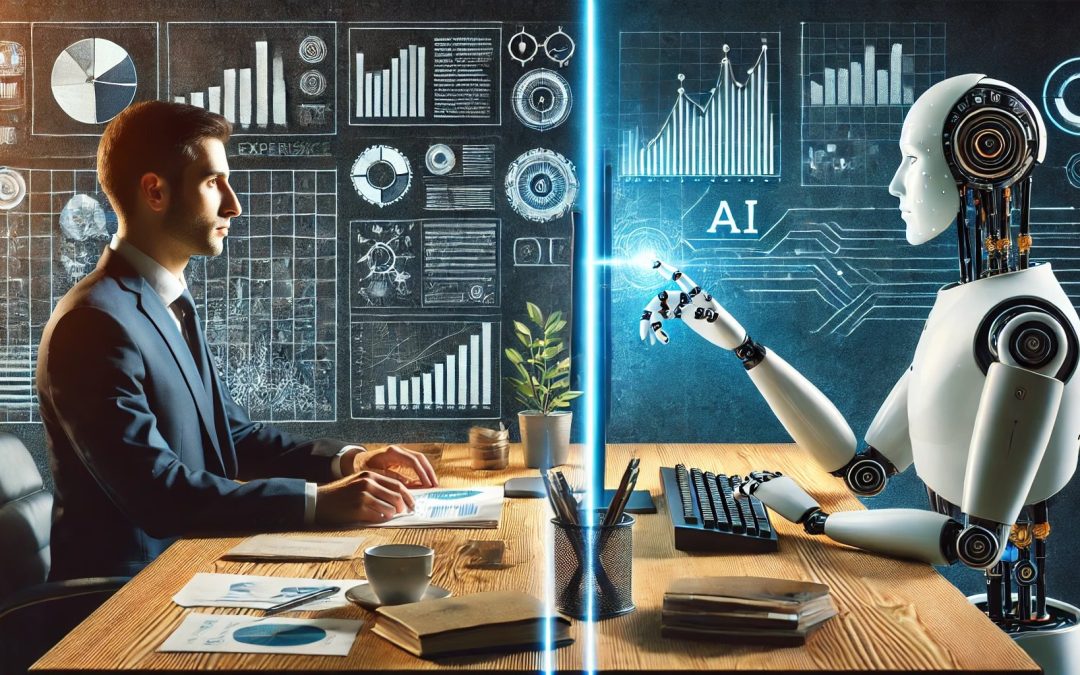
Written by AI
It was 7 AM, and Jordan tapped his coffee mug thoughtfully as he stared at the glowing screen in front of him. The presentation deadline was hours away, but there was no panic. After all, ChatGPT had already whipped up a sleek deck the night before, complete with a compelling sales pitch and bulletproof data slides.
“Done,” he whispered to himself, taking a sip of his coffee with a satisfied grin. Not long ago, he would have been burning the midnight oil, poring over marketing research, perfecting the tone of each slide, making sure the message aligned with the brand’s voice and vision. But now? AI did it all in a fraction of the time.
As Jordan leaned back in his chair, a new thought surfaced, one that was darker and more troubling. Had he really done the work, or had he just let the machine take over?
His mind flashed back to the conversation he’d had with his mentor, Lisa, just a few days prior.
“You know, Jordan,” Lisa said, eyeing him over her glasses, “AI is useful, but it’s not a replacement for mastery.”
Jordan raised an eyebrow. “What do you mean? It’s saving me so much time. I can get more done, more quickly.”
Lisa nodded. “I get it. But there’s a danger in becoming too dependent. Sure, AI can create your presentations or write your emails. It can even suggest strategies. But is it you?”
Jordan frowned. “It’s efficient.”
“And that’s the trap,” Lisa leaned forward. “Look, I’ve seen this happen before. People start using AI for shortcuts. They ask chatbots to write job descriptions, decision-making algorithms to screen candidates, digital assistants to handle meetings and emails, and soon they forget the one thing that got them ahead in the first place—actual expertise.”
Jordan shook his head. “I’m still in control. I make the final decisions.”
“But are you learning?” Lisa asked pointedly. “Or are you letting the machine do all the heavy lifting? Let me tell you something—every single successful person you know, whether they’re a surgeon, lawyer, or even a public speaker, became world-class by mastering their craft. They put in the hours, and they built something unique. Something an AI can’t replicate.”
Jordan sat back, arms crossed. “But the world is changing. AI’s becoming a part of everything. Why shouldn’t I use it to my advantage?”
Lisa smiled. “You should. But use it wisely. It’s like a tool—not a crutch. When you lean on AI too much, you stop developing the skills that make you valuable in the first place. That’s the difference.”
Now, as Jordan stared at his screen, her words echoed in his mind. Was this presentation really him, or was it just the product of AI algorithms?
He clicked through the slides again. The data was correct, the design flawless, but something was missing. The heart. The finesse that came from years of practice in the trenches, from knowing the market inside out. He could see it now—AI had produced something technically sound, but it lacked his personal touch.
Was that enough?
He closed his laptop and reached for his phone. Lisa’s number flashed across the screen. He hit call.
“Hey, Jordan,” she answered after two rings. “What’s up?”
“I’ve been thinking about what you said the other day,” he began, feeling a twinge of nervousness. “About how AI can make us lazy if we’re not careful.”
Lisa was quiet for a moment, then spoke. “What’s going on?”
“I just finished a presentation for a big pitch,” he admitted. “ChatGPT helped me with it. Well, not helped—more like, it did most of the work. It’s good. It’s accurate. But now I’m wondering… Is it really me?”
Lisa chuckled softly. “There it is. You’re seeing the difference now, aren’t you?”
“Yeah,” Jordan said. “I think I’ve been letting the tech do too much. It’s easy, but it feels like I’m cheating myself out of real growth.”
“And that’s the real risk,” Lisa agreed. “Don’t get me wrong, AI can be amazing for certain tasks—document creation, research, automating processes, sure. It can give you time back, but it’s not the thing that’s going to make you better at what you do. That only comes from experience.”
Jordan thought about this for a moment. “So, what’s the balance? How do I use AI without losing my edge?”
“You use AI to enhance what you already know,” Lisa said. “You use it to speed up the repetitive stuff—scheduling, transcription, data analysis—but when it comes to the deep work? The strategy, the creative direction, the stuff that makes you stand out? That’s all you. AI can’t replace your judgment, your intuition. It doesn’t have your voice. You can use it to assist, but if you’re not constantly sharpening your own skills, you’ll fade into the noise.”
Jordan nodded, feeling a sense of clarity. “I get it. So instead of using AI to do everything, I need to use it to do the things that free me up to focus on what really matters.”
“Exactly,” Lisa said. “That’s how you use it professionally. It’s not about being lazy; it’s about being smarter. AI doesn’t replace expertise—it supports it. But you still have to put in the work to become an expert.”
Jordan felt a spark of motivation. “You’re right. I think I’m going to rework the presentation. Add my own insights. Something that shows what I know, not just what AI can spit out.”
Lisa’s smile was evident in her voice. “Now that’s the spirit. And remember—AI might give you a dopamine hit by getting things done quickly, but long-term success comes from mastery, not shortcuts. Don’t trade your future for convenience.”
As the call ended, Jordan reopened his laptop. This time, he didn’t just review the slides passively—he dove in. He rewrote sections, added personal anecdotes, reanalyzed the data. Slowly, the presentation began to transform into something more—something that reflected his experience, his insights. Sure, AI had saved him time, but now he was using that time to push the work further.
The next day, Jordan stood before his team, confident in the presentation he was about to give. He had used AI to get him started, but the final product was undeniably his own. It was a blend of efficiency and expertise, and the difference was clear.
When the meeting ended, one of his colleagues came up to him. “Great job, Jordan. That presentation really stood out. AI couldn’t have done that.”
Jordan smiled. “Exactly.”





 Guest Posting

