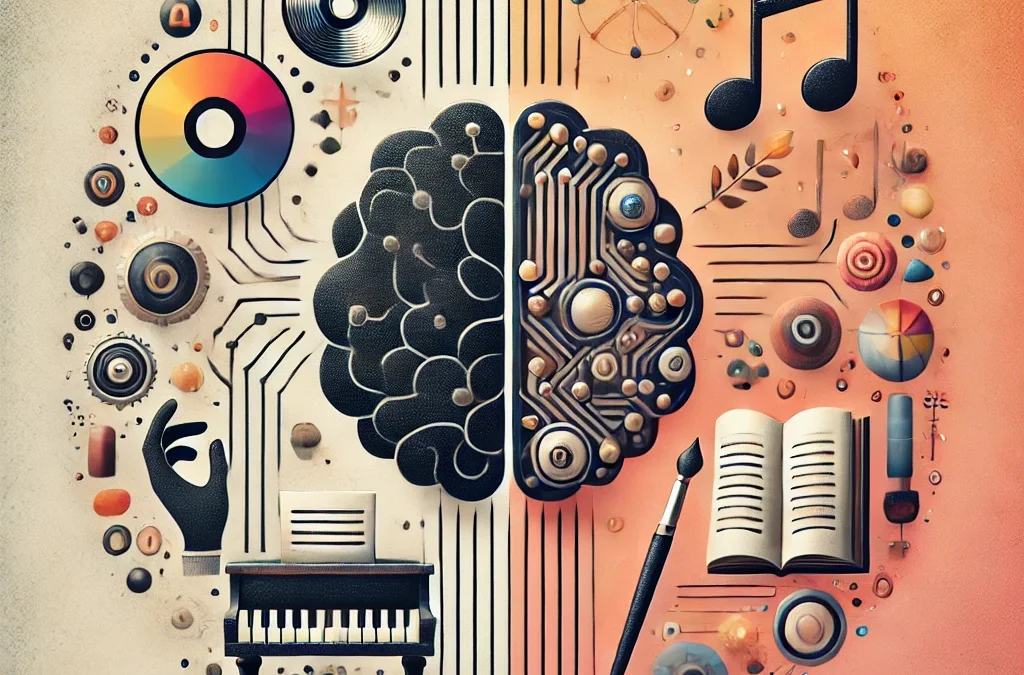
Artificial intelligence (AI) has been making waves in creative fields lately, sparking a lot of excitement—and just as much controversy. Whether it’s generating new songs, creating stunning visuals, or even writing entire articles, AI is transforming how we think about creativity. But this transformation isn’t without its bumps in the road. One of the biggest questions people are asking is: Is it ethical to use AI tools that might infringe on the rights of creators? Let’s dive into this issue, break it down, and figure out where we stand.
How AI Works in Simple Terms
First, let’s talk about how AI actually works. At its core, AI is about teaching computers to do tasks that normally require human intelligence. Think of it like training a dog—except instead of fetching a ball, we’re teaching AI to recognize patterns, make decisions, or create something entirely new. This training process involves feeding the AI system massive amounts of data—like music, images, text, and videos—so it can learn and mimic the patterns it sees. It does not copy or plagiarize anything; rather it learns much the same way humans do.
But where does this data come from? Usually, it’s scraped from the internet. That means AI systems are often trained on publicly available content—stuff that’s already out there, created by musicians, artists, writers, and filmmakers. And this is where things start to get tricky. Does the use of copyrighted materials to train AI systems constitute infringement, or is it considered “fair use,” in the same way that humans can mimic or remix styles they’ve seen?
Think of it this way: If I am a musician and listen to 70’s rock music and am influenced by artists like Led Zepplin, The Doobie Brothers, and the Eagles, and I start writing my own music based on what I’ve learned by listening to this music, have I violated any copyright laws? I’m not copying any lyrics, chords, rhythms, or melodies – I’m creating something entirely new, but still you know that I was influenced by these artists. The same argument can be used for images, writing or any other creative expressions. We all learned from past information we have received, even if those works were protected by copyright law.
The Legal and Moral Debate Over AI Training Data
Now, legally speaking, the use of this data for training AI is a bit of a gray area. Some folks argue that it’s “fair use”—a legal doctrine that allows limited use of copyrighted material without needing permission. Others, especially the creators whose work is being used, see it as straight-up copyright infringement.
The moral implications are just as murky. On one hand, there’s the argument that using someone’s work without permission is wrong—after all, it’s their blood, sweat, and tears that went into creating it. On the other hand, there’s the idea that AI can democratize creativity, making it easier for anyone to produce music, art, or writing. So, where do we draw the line?
AI’s Impact on Different Creative Fields
Let’s break it down by looking at how AI is affecting different creative fields.
Music: AI can generate new songs by analyzing existing ones, which is pretty cool—until you consider the impact on musicians. If an AI can churn out a hit song by mimicking the style of a popular artist, does that devalue the original work? Some people think so, and that’s why there are already lawsuits flying around.
Graphical Images: AI can create breathtaking art by learning from existing images. But again, who owns the rights to that AI-generated art? And what about the artists whose work was used to train the AI? The legal battles over this are just getting started, and they’re raising big questions about the future of digital art. A federal judge in the United States has allowed a landmark copyright lawsuit to proceed against major AI art generators, including Stability AI, Runway, Midjourney, and DeviantArt.
Text: Generative AI of course started with writing. It can generate articles, stories, or scripts that are surprisingly good. But if an AI is trained on thousands of written works, what does that mean for the writers? Could it lead to a devaluation of original writing? It’s a real concern, especially as AI-generated content becomes more common and new AI models use this AI-generated content as part of their training data.
Video: Then there’s video. AI can produce video content, including deepfakes—videos that can be so realistic, they’re hard to distinguish from the real thing. This raises serious ethical concerns around privacy, consent, and even misinformation. And for filmmakers, it presents a whole new set of challenges.
The situation with AI potentially infringing on creators’ rights has some parallels to the disruption that Apple brought to the music industry, especially with the introduction of iTunes and later Apple Music.
Disruption and Democratization
Apple disrupted the traditional music industry by changing how music was distributed and consumed. Before iTunes, music was predominantly sold in physical formats like CDs, and piracy through platforms like Napster was rampant. iTunes introduced a new model, allowing consumers to purchase individual songs digitally, making music more accessible and affordable. Similarly, AI is democratizing creativity by making tools for generating music, art, and writing widely available, often at a lower cost than traditional methods.
Impact on Creators
Just as AI is raising concerns about the infringement of creators’ rights, Apple’s disruption of the music industry had a significant impact on artists and record labels. Many artists were initially concerned about the lower revenue per song sold on iTunes compared to traditional album sales. Likewise, AI’s ability to create content based on existing works raises concerns about the devaluation of original creative efforts and the potential loss of income for creators.
The legal battles we’re seeing today with AI echo the disputes that arose when Apple’s digital music model first gained traction. Record labels and artists had to renegotiate contracts and figure out new royalty structures to adapt to the digital age. Similarly, the legal system is currently grappling with how to handle AI-generated content and the use of copyrighted material in AI training.
The Real Winners: Lawyers and Legal Battles
So, who’s really going to win in this fight over AI and creators’ rights? If you ask me, it’s probably the lawyers. As AI continues to evolve, so will the number of legal disputes. Lawyers are going to have a field day with this, making money hand over fist as they navigate the complex legal landscape of AI and intellectual property.
But what about the creators and the tech companies? For them, these legal battles could be both costly and exhausting. And let’s not forget the public, who might end up getting caught in the crossfire. Will these legal disputes protect creators and consumers, or will they just create more barriers to innovation? Only time will tell.
The Potential Benefits of Letting AI Use Your Data
Now, let’s flip the script. What if, instead of fighting AI, creators embraced it? There are actually some potential benefits to letting AI use your work for training.
Exposure and New Opportunities: Allowing AI to use your work could increase your visibility. If an AI-generated piece based on your art goes viral, that could bring attention back to your original work. Plus, there’s always the possibility of collaboration with AI-driven platforms, opening up new creative opportunities.
Innovation and Inspiration: AI isn’t just about copying what’s already been done—it can also inspire new ideas. By blending human creativity with AI’s capabilities, we could push the boundaries of what’s possible in music, art, and writing. Think of it as a partnership, where both human and machine bring something valuable to the table.
Revenue Sharing Models: There’s also the potential for fair revenue-sharing models. Imagine a world where creators are compensated every time their work is used to train an AI system. This could incentivize creators to allow their work to be used while ensuring they’re fairly rewarded for their contributions.
Is It Ethical?
So, is it ethical to use AI tools that might infringe on creators’ rights? I think it can be—under certain conditions. For one, there needs to be transparency. Creators should know when and how their work is being used. Consent is also crucial; creators should have the choice to opt in or out of having their work used by AI. And finally, fair compensation is key. If an AI tool is going to profit from someone’s work, the original creator deserves a share of that profit.
When these conditions are met, the use of AI can be ethical and even beneficial. It’s not about replacing human creativity, but enhancing it. Apple eventually provided artists with new revenue streams and broader reach, and AI has the potential to do the same, offering new tools for creativity and new ways to monetize creative works, as long as fair and ethical practices are implemented. By finding a balance between innovation and fairness, we can create a future where AI and human creativity coexist, each amplifying the other.
Conclusion: A Compelling Case for AI in Business
At the end of the day, AI is here to stay, and it’s going to keep transforming the way we create and consume content. Rather than fighting it, we should be finding ways to use it responsibly and ethically. For businesses, this means embracing AI as a tool for innovation and growth while respecting the rights of creators. The key is to strike a balance that benefits everyone involved—creators, consumers, and businesses alike.
AI has the potential to revolutionize industries, unlock new opportunities, and drive business innovation. But to do this ethically, we need to ensure that the rights of creators are protected, that transparency and consent are prioritized, and that fair compensation is provided. When done right, AI can be a powerful force for good, pushing the boundaries of what’s possible while honoring the work of those who paved the way.
So, is it ethical to use AI tools that potentially infringe on creators’ rights? Stay tuned – the next year or two is going to get very interesting!






 Guest Posting

