
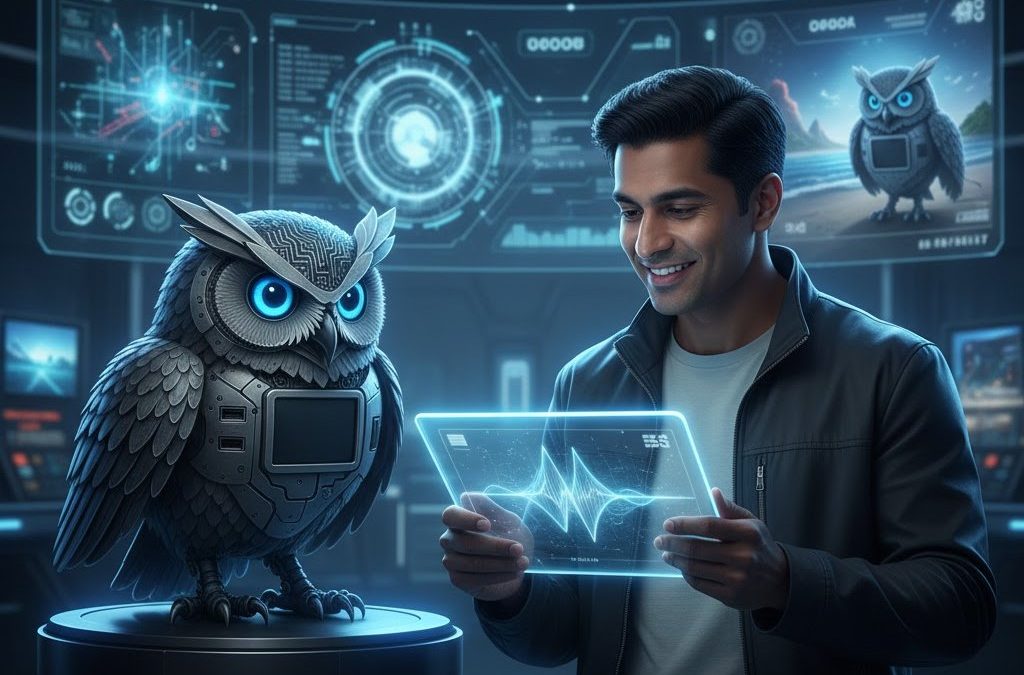
When Oliver and I Finally Got Our Hands on Sora
This morning started like most: a quiet view of the mountains and my phone lighting up with yet another tech headline. But this one made me sit up straight: “Sora for Android is now available.”
About time.
As an Android user, I’d been watching iOS users play with Sora for what felt like an eternity. Half the user base was locked out while Apple folks got to experiment with AI-generated video like it was some exclusive club. For someone who’s spent a lifetime watching technology evolve—from dial-up modems to AI that builds films from pixels and prompts—being on the outside looking in felt particularly ironic.
But now? Game on.
If you’re a creator, marketer, or business owner trying to keep up with AI’s pace, this Android release is more than just platform parity. It’s a signal that the creative playing field just got a lot more level.
Oliver Makes His Cinematic Debut
If you’ve followed me for a while, you know Oliver Owlgorithm. He’s the digital owl who lives somewhere between my imagination and the machine—wise, sarcastic, and occasionally more photogenic than I am. So naturally, when Sora invited me to “record a cameo,” I pointed the camera at us both.
The setup was straightforward: read some numbers, look left, look right (or up), and let the AI work its magic. I recorded a quick clip, and within seconds, we were starring in what looked like a trailer for a futuristic documentary. Oliver perched beside me, digital feathers glowing, the lighting cinematic. It was us… but reimagined by an algorithm that understood not just movement, but mood.
That’s what sets Sora apart. It’s not stitching clips together like a traditional editor—it’s inventing worlds. The Android version delivers everything the iOS app offered: the cameo generator, the scrolling discovery feed that feels like TikTok met Pixar’s experimental lab, and the ability to remix what others create.
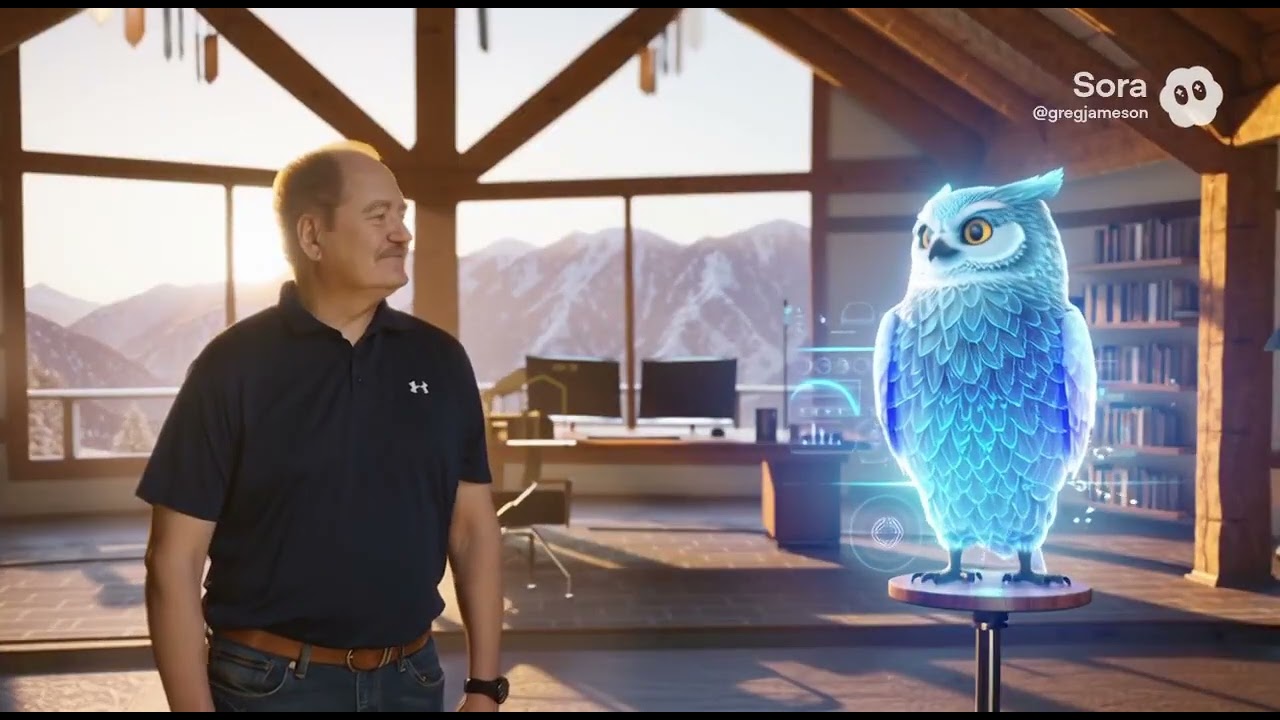
OpenAI rolled this out across the U.S., Canada, Japan, Korea, Taiwan, Thailand, and Vietnam simultaneously. They’re not just launching an app—they’re launching a medium.
Why This Actually Matters
Here’s what gets me excited: a few years ago, creating professional video content meant hiring a crew, renting equipment, spending hours in editing, and hoping the result didn’t look like a late-night infomercial. Now? A few taps on your phone produces cinematic clips that feel handcrafted.
This is what democratization looks like in action.
The headline feature is “Cameos”—deceptively simple but wildly powerful. Record a motion, and Sora transforms it into whatever scene makes sense. Wave in your living room, end up waving from a spaceship cockpit. Walk across your kitchen, find yourself striding down a neon-lit Tokyo street.
It’s visual storytelling powered by intent.
OpenAI didn’t just port Sora to Android—they optimized it. The motion tracking is smooth. The lighting effects feel professional. And those subtle human elements—how fabric catches light, how reflections work—they register as real.
When I watched our clip, it struck me: the app didn’t just generate video. It understood it.
The Content Volume Problem (Solved)
A colleague recently told me something that stopped me cold: if you want to get “TikTok famous,” you need to record and upload 2 videos every day for 30 days straight. That’s when the magic happens. My teenage neighbor (who now has 40 million followers on TikTok and has a bigger net worth than most adults), did this. But most of us don’t have that kind of time.
That’s 60 videos. In a month.
For most people—especially small business owners juggling a thousand other priorities—that’s functionally impossible. The creative energy alone would be exhausting, never mind the filming, editing, and uploading.
But here’s where Sora changes the math entirely.
You can create a cameo video in minutes. Record a few different motions, let Sora generate variations, download them, and upload the results to TikTok. What used to require 60 separate production sessions can now happen in a few focused hours spread across the month.
Suddenly, that “2 videos per day” strategy isn’t aspirational—it’s achievable.
This isn’t about gaming the algorithm or churning out meaningless content. It’s about removing the friction between your ideas and your audience. If you’ve got the creativity and the message, Sora handles the execution. You’re no longer limited by production capacity—you’re only limited by imagination.
And for personal brands, influencers, or businesses trying to build presence on short-form video platforms? That’s a complete game-changer.
The Reddit Reality Check
Naturally, Reddit exploded. Posts filled r/OpenAI within hours:
“The AI movement tracking is way better than expected!”
“It’s like deepfakes went to film school.”
People are experimenting, pushing boundaries, and yes—raising valid concerns about deepfakes, impersonation, and ethical use. TechCrunch called it out directly: while OpenAI is building creative tools, they’re also navigating the minefield of digital identity.
This tension is exactly why creators and business owners need to engage with these tools early. The people who shape first-generation use cases set the tone for what’s acceptable later. If we leave it to bad actors, they’ll define the narrative. But if we get in early and model responsible use—showing the human behind the AI—that’s where real progress happens.
Practical Applications (Without the Cringe)
Within hours of launch, I saw businesses already experimenting:
- A boutique clothing brand created fashion clips in surreal environments matching their color palette
- A real estate firm generated virtual walkthroughs narrated by their own agents
- A yoga instructor filmed basic stretches, then used Sora to transport herself to a digital beach for her class trailer
None of this required post-production. Just imagination.
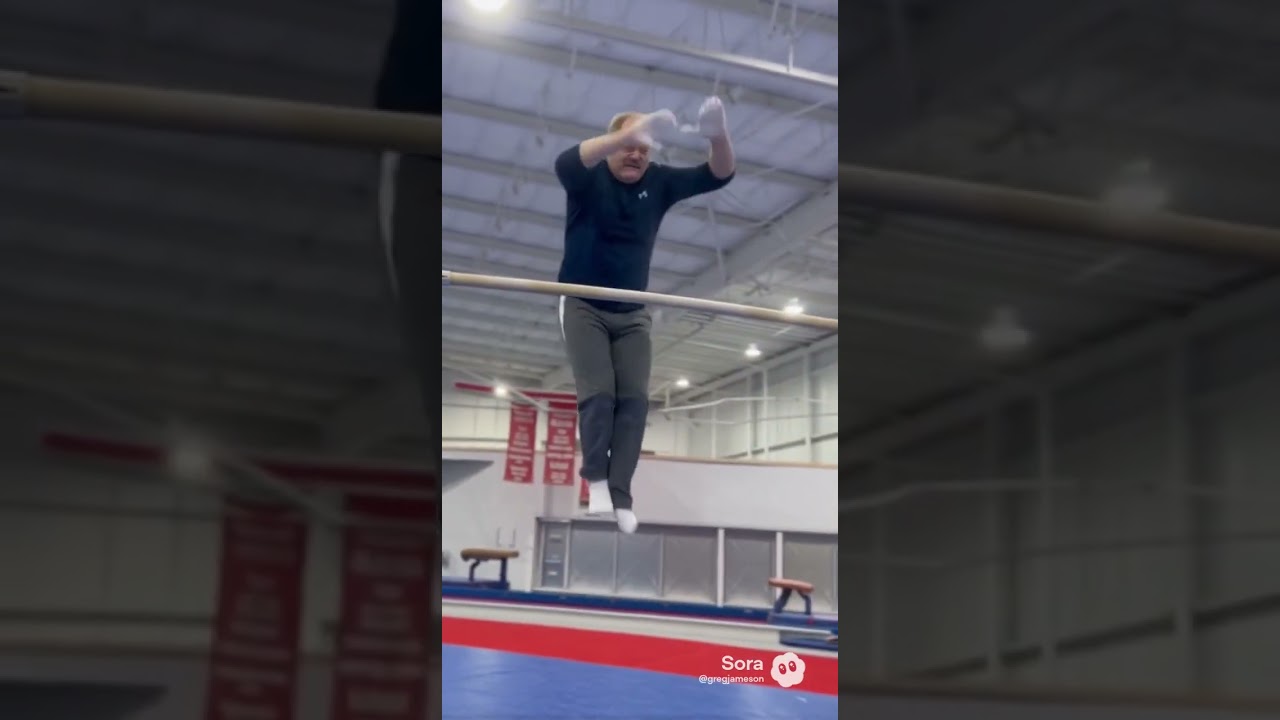
Think about what you could do: a quick “About Us” clip where your store morphs from humble beginnings to current form. A video where your mascot explains a product inside a virtual 3D demo. That’s not just content—it’s storytelling that captures attention in an age of scroll fatigue.
This fits perfectly into the bigger trend of AI Optimization—helping brands become visible to both humans and machines. It’s not just about ranking on Google anymore. It’s about being discoverable across AI-driven platforms like ChatGPT, Gemini, Copilot, Perplexity… and potentially Sora’s creative feed.
Businesses can use Sora to:
- Prototype video ideas before investing in full production
- Create social media teaser clips
- Train AI clones to act as visual spokespeople
- Connect with audiences in more immersive ways
The Bigger Picture
TechCrunch noted something most people missed: this Android rollout is part of OpenAI’s strategy to unify its creative ecosystem. Sora isn’t standalone—it’s the visual component of something larger. Between ChatGPT, DALL·E, and now Sora, they’re building a full-stack creative suite where words, images, and videos merge into a single workflow.
The walls between disciplines are disappearing. Writers are becoming filmmakers. Designers are becoming storytellers. Entrepreneurs are becoming media studios.
And now those studios fit in your Android pocket.
The Necessary Caution
Every creative tool comes with risk. Deepfakes, misinformation, copyright battles—these aren’t hypothetical concerns. OpenAI has implemented guardrails like restricting realistic depictions of public figures and embedding digital watermarks. But those systems aren’t foolproof.
So we lead by example. We show how AI can enhance authenticity instead of replacing it. We use these tools to amplify truth, creativity, and connection—not distort them.
The answer isn’t to resist progress. It’s to shape it.
What This Really Means
As I wrapped up testing Sora, Oliver looked (or seemed to look) right at me from the screen. His eyes glowed softly, and for a second, it felt like he was proud of our little film debut.
This is the future of storytelling: not human versus machine, but human with machine. Creativity is no longer bound by budget, geography, or skill level—only by imagination.
Technology changes fast. But the reason we create hasn’t changed in thousands of years. We tell stories to connect, to inspire, and to remember who we are.
AI doesn’t erase that—it gives it new life. It doesn’t replace you; it multiplies what you can do.
So fire up Sora on your Android phone. Record a cameo. Let the AI show you what it sees in your story. Then share it—not as a gimmick, but as a statement that you’re part of the next wave.
And if you need inspiration, watch my clip with Oliver Owlgorithm. I may have written the prompt—but Oliver definitely stole the scene.





 Guest Posting

